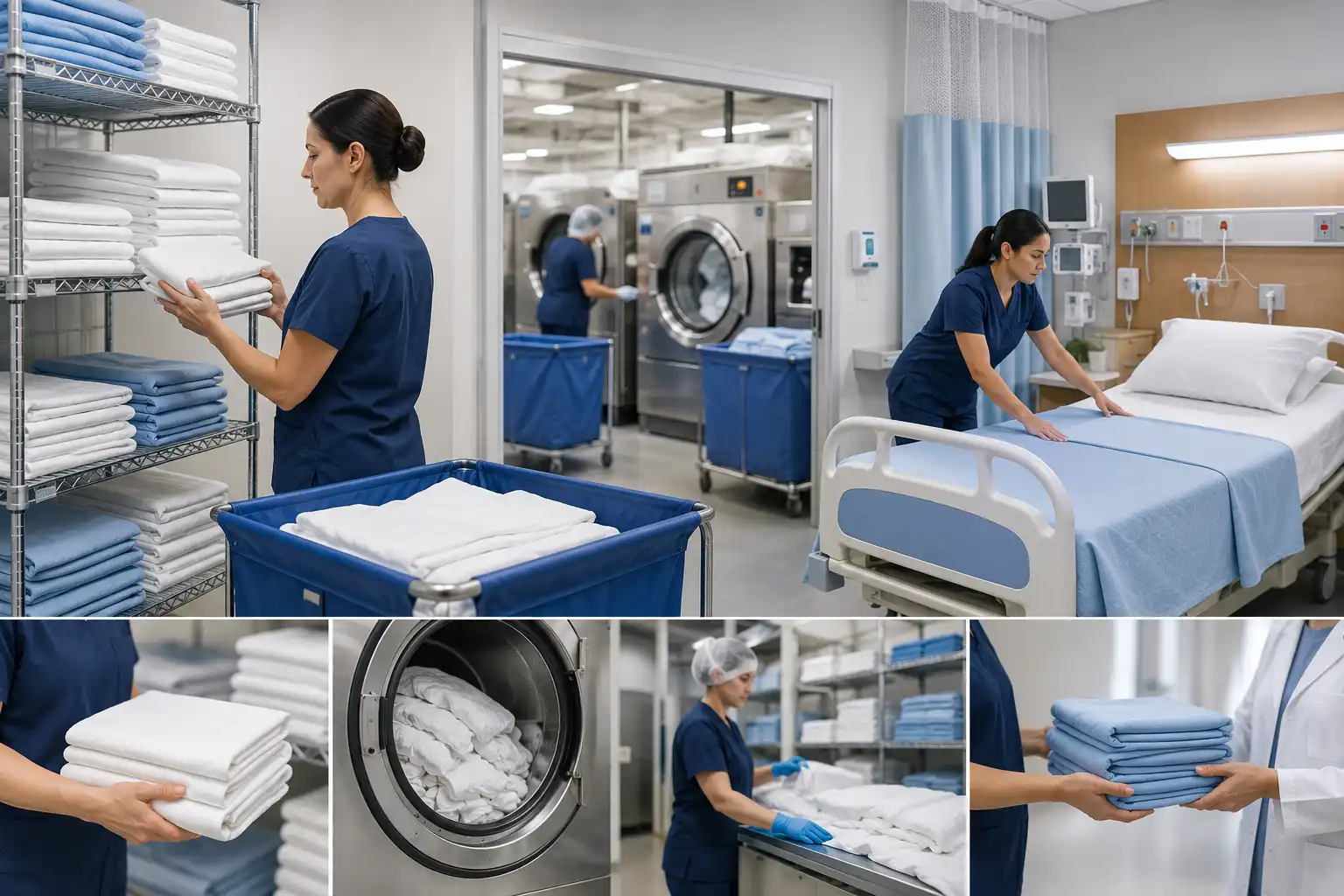
There’s a bed in Ward 4. Freshly made. Crisp white sheet, neatly folded corners. It looks clean.
But here’s the question nobody asks out loud: Is it actually clean?
Not visually clean. Not smell-fine clean. But microbiologically, process-verified, infection-control clean — the kind of clean that matters when a post-surgical patient with a compromised immune system lies down on it for the next eight hours.
That question, and the answer behind it, is what hospital laundry hygiene standards are really about.
What’s really living on that hospital bed
Hospital-acquired infections (HAIs) are among the most preventable, yet most persistent, threats in modern healthcare. While conversations around HAIs often focus on surgical instruments, hand hygiene, and ventilation, the linen on the bed, the gown on the patient, and the drape in the OT rarely get the spotlight they deserve.
A 2022 study published in the Journal of Patient Safety and Infection Control tested hospital linen before and after laundering. The findings were striking: every single pre-wash sample contained live bacteria, and nearly 1 in 4 carried multi-drug-resistant organisms (MDROs), the kind hardest to treat. In simple terms, dirty hospital linen is not just unclean; it can be actively dangerous. The good news is that a proper laundry process reduces that bacterial load by a factor of thousands. The bad news is that an improper one does not just fail to clean; it spreads those pathogens further.
This is not a minor operational detail. This is patient safety infrastructure.
What “hygienic hospital laundry” actually means
The term hygienic laundry services for hospitals is often used loosely. But genuine hygiene compliance in hospital linen management follows a specific, layered process — not just hot water and detergent.
Here is what the standard actually looks like.
1. Segregation at source — before the wash even begins
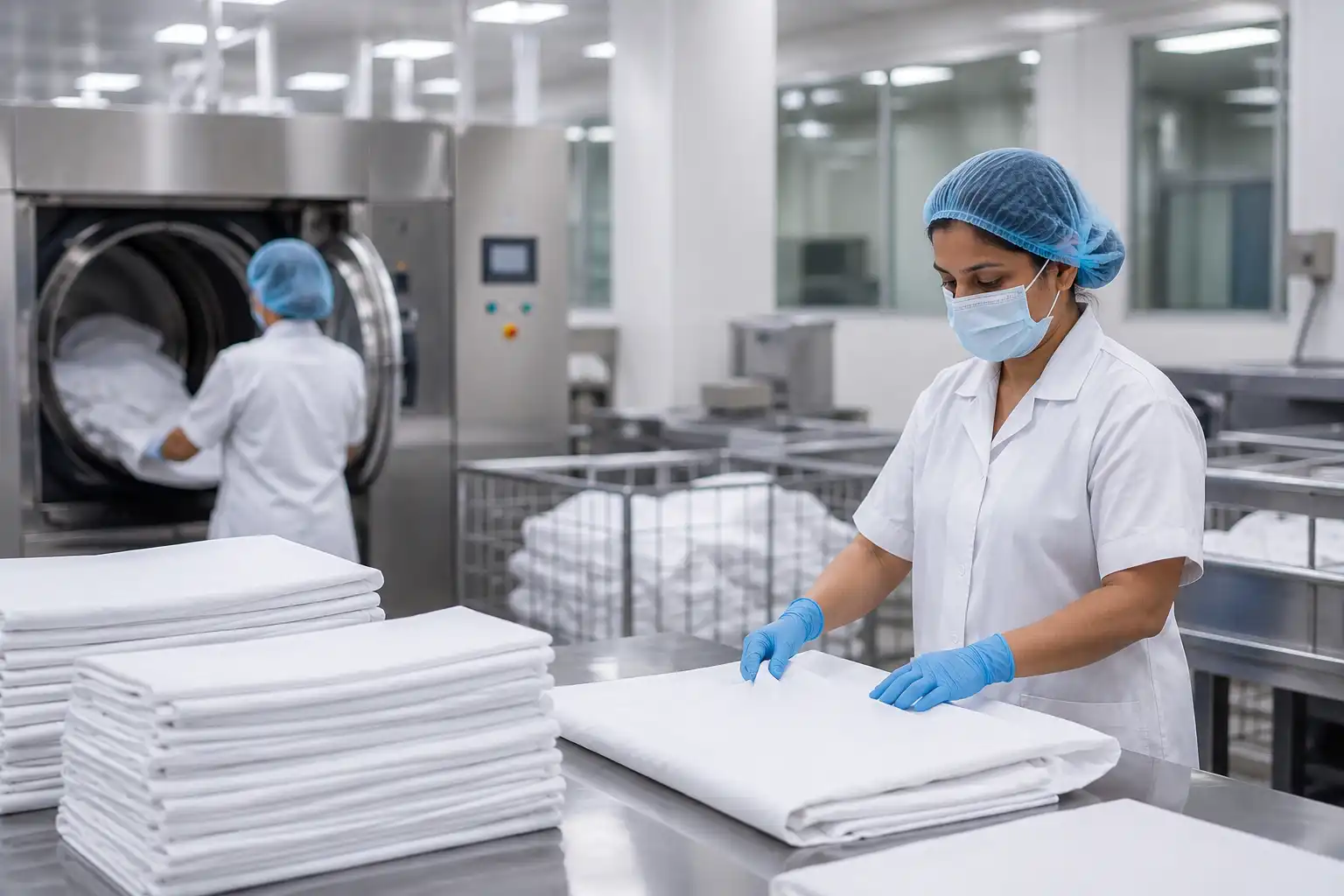
Infected linen must never travel the same path as regular patient linen. Colour-coded bags, sealed containment, and PPE-equipped staff are the first line of defence. OT linen, isolation ward linen, and general ward linen each follow distinct handling protocols.
2. Thermal disinfection — the temperature standard
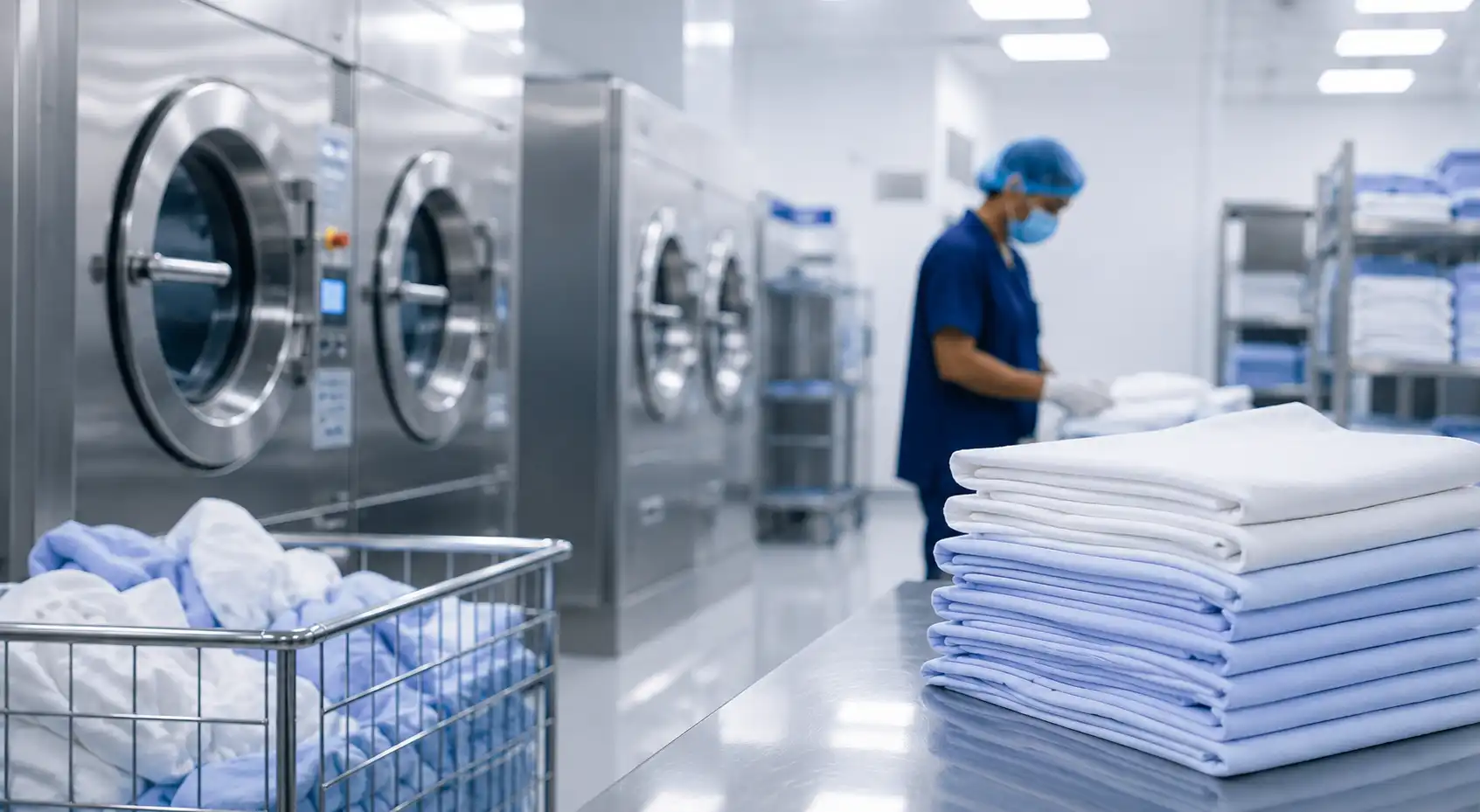
Professional medical linen washing requires sustained wash temperatures above 70°C for a minimum contact time to achieve the thermal kill necessary for pathogen elimination. Many in-house hospital laundries in India run below this threshold due to equipment limitations or cost pressures. NABH-compliant laundry processes mandate adherence to these thermal standards, and compliance is not optional for accredited facilities.
3. Chemical protocol — not just any detergent
Commercial laundry for healthcare facilities requires hospital-grade disinfectants used at the right strength — not whatever detergent is available. For infected linen specifically, India’s Ministry of Health and Family Welfare recommends a sodium hypochlorite (bleach-based) solution at a specific concentration, applied for at least 20 minutes before the linen even enters the main wash cycle. Think of it as a mandatory pre-soak that neutralises the most dangerous pathogens before washing begins.
4. Unidirectional flow — the clean/dirty wall
One of the most critical — and most violated — principles of industrial hospital laundry services is unidirectional flow: soiled linen enters from one side of the facility; clean linen exits from the other. The two streams never cross. Not the linen, not the trolleys, not the staff hands. Cross-contamination between clean and soiled linen can undo an entire wash cycle in seconds.
5. Post-process handling — where most facilities fail
Clean linen contaminated after the wash is a well-documented problem. Healthcare workers accessing clean linen storage without prior hand hygiene, uncovered transport from off-site facilities, and storage in areas adjacent to waste zones are real, recurring failures. Professional outsourced hospital laundry addresses this with covered transport, sealed packaging, and clean-room delivery protocols.
OT linen: the highest-risk linen in the hospital
If there is one area where hygienic laundry standards cannot be compromised, it is the operation theatre.
OT linen washing services sit at the intersection of sterile field management and infection prevention. Surgical drapes, scrubs, gowns, and covers that re-enter the OT with residual microbial load contribute directly to surgical site infections (SSIs) — some of the most serious and costly HAIs a hospital can face.
OT linen demands not just thermal disinfection but verified microbial clearance, appropriate packaging to maintain sterility through transport, and RFID or barcode tracking so every piece of linen can be traced through its complete wash and delivery journey.
This level of process integrity is not achievable in a basement laundry room. It requires an industrial hospital laundry service built specifically for healthcare-grade hygiene.
What NABH says — and why it matters beyond accreditation
NABH does not treat laundry as a soft service. Its standards address linen management as an infection control function, requiring:
- Documented segregation and handling procedures
- Verified thermal and chemical disinfection protocols
- Evidence of staff training and PPE compliance
- Traceability and audit readiness for linen cycles
For hospitals seeking or maintaining NABH accreditation, the laundry partner they choose is directly tied to compliance readiness. A NABH-compliant laundry process is not a checkbox; it is an ongoing operational standard that survives inspection.
Outsourced hospital laundry from a certified, process-driven provider does not just handle the washing. It handles the documentation, the audits, and the accountability that an accreditation surveyor will ask for.
The cost of getting it wrong
Let’s be direct about what non-compliant hospital laundry actually costs.
An HAI outbreak traced to contaminated linen does not just harm patients. It triggers investigation, temporary ward closures, reputational damage, potential litigation, and in severe cases regulatory action. The cost of treating a single HAI in India ranges from ₹50,000 to several lakhs depending on the pathogen and the complication. Multiply that across an outbreak, and the economics of proper linen hygiene become obvious.
The question is not whether professional, hygienic hospital laundry services in Jaipur are worth the investment. The question is whether any hospital can afford the alternative.
What a modern hospital laundry partner looks like
The benchmark has changed. Hospitals that partner with professional linen management companies rather than treating laundry as an afterthought get more than clean linen. They get:
- Process accountability: every cycle logged, every temperature recorded, every batch tracked
- Infection control integration: laundry protocols designed in alignment with the hospital’s own IC committee requirements
- Scalability without compromise: whether it is 200 beds or 2,000, the hygiene standard does not change with volume
- Regulatory readiness: documentation and processes built for NABH, NABH-HCO, and other accreditation frameworks
- Zero infrastructure burden: no capital expenditure on industrial equipment, no recruitment headaches, no compliance ownership — fully outsourced and fully accountable
This is the model that serious healthcare facilities are moving toward. Not because it is convenient, but because the alternative is a hygiene liability they can no longer carry.
Clean linen is not a luxury. It is a responsibility.
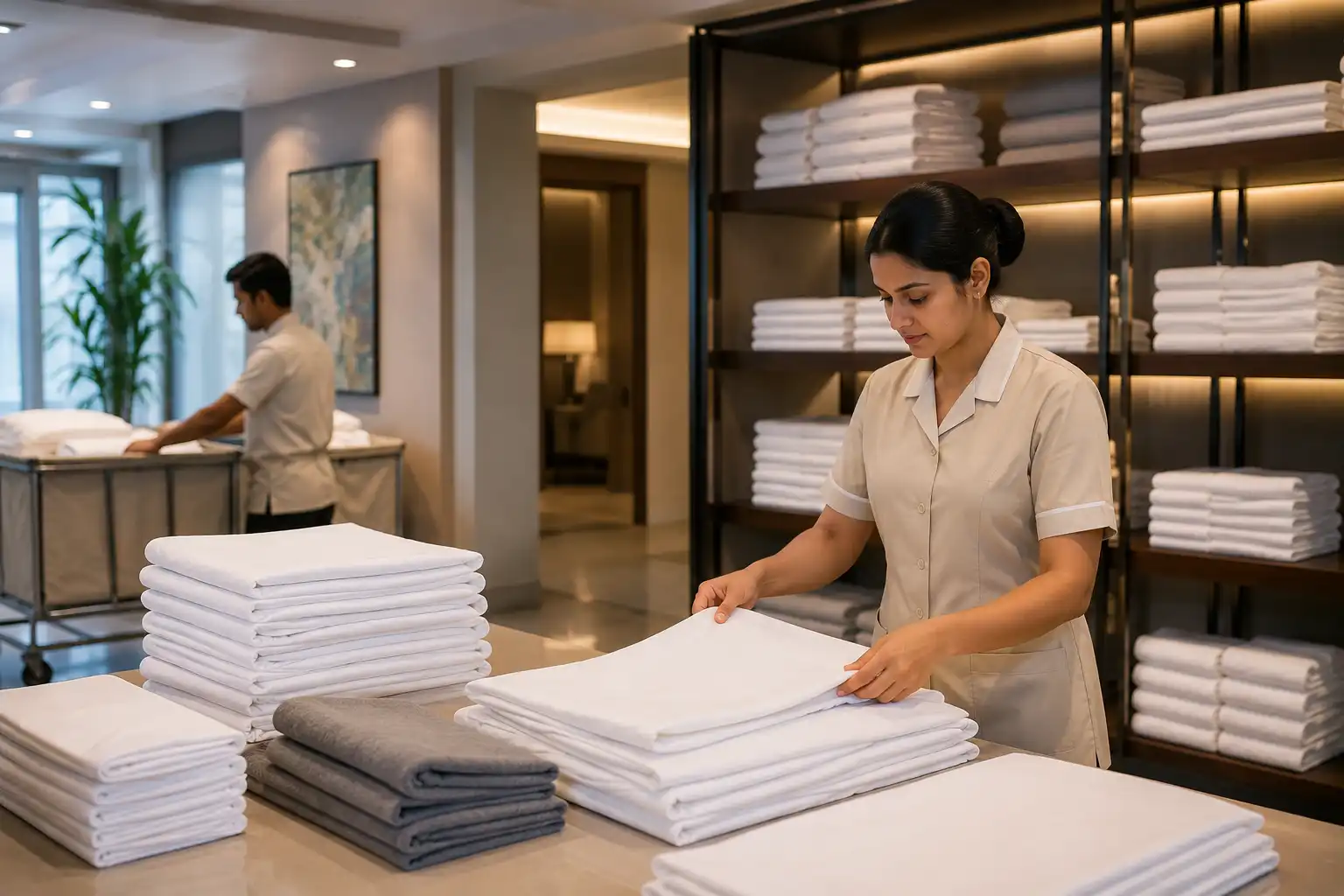
A hospital bed is not a hotel bed. The person lying in it is already vulnerable to infection, complication, and risk they did not come in with.
The linen on that bed is not décor. It is a clinical contact surface. And like every other clinical contact surface in a hospital, it must meet a standard that goes beyond what the eye can see.
Hygiene standards in hospital laundry services exist because patients deserve more than linen that looks clean. They deserve linen that is clean, provable, traceable, and every single time.
That is not a high bar. That is the minimum.
Clean linen should not be a question mark. Talk to Quick Smart Wash about hospital laundry that is built to prove it.