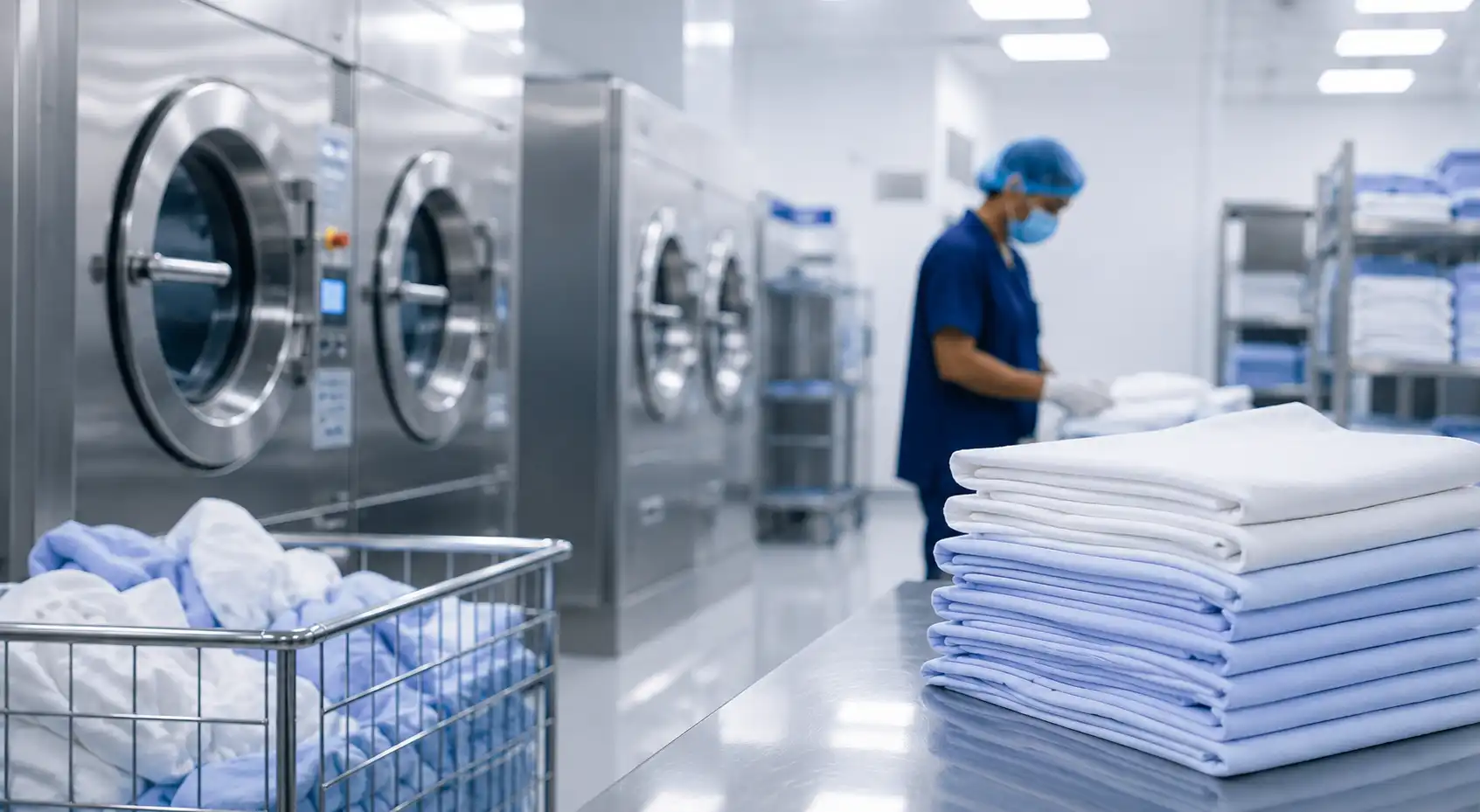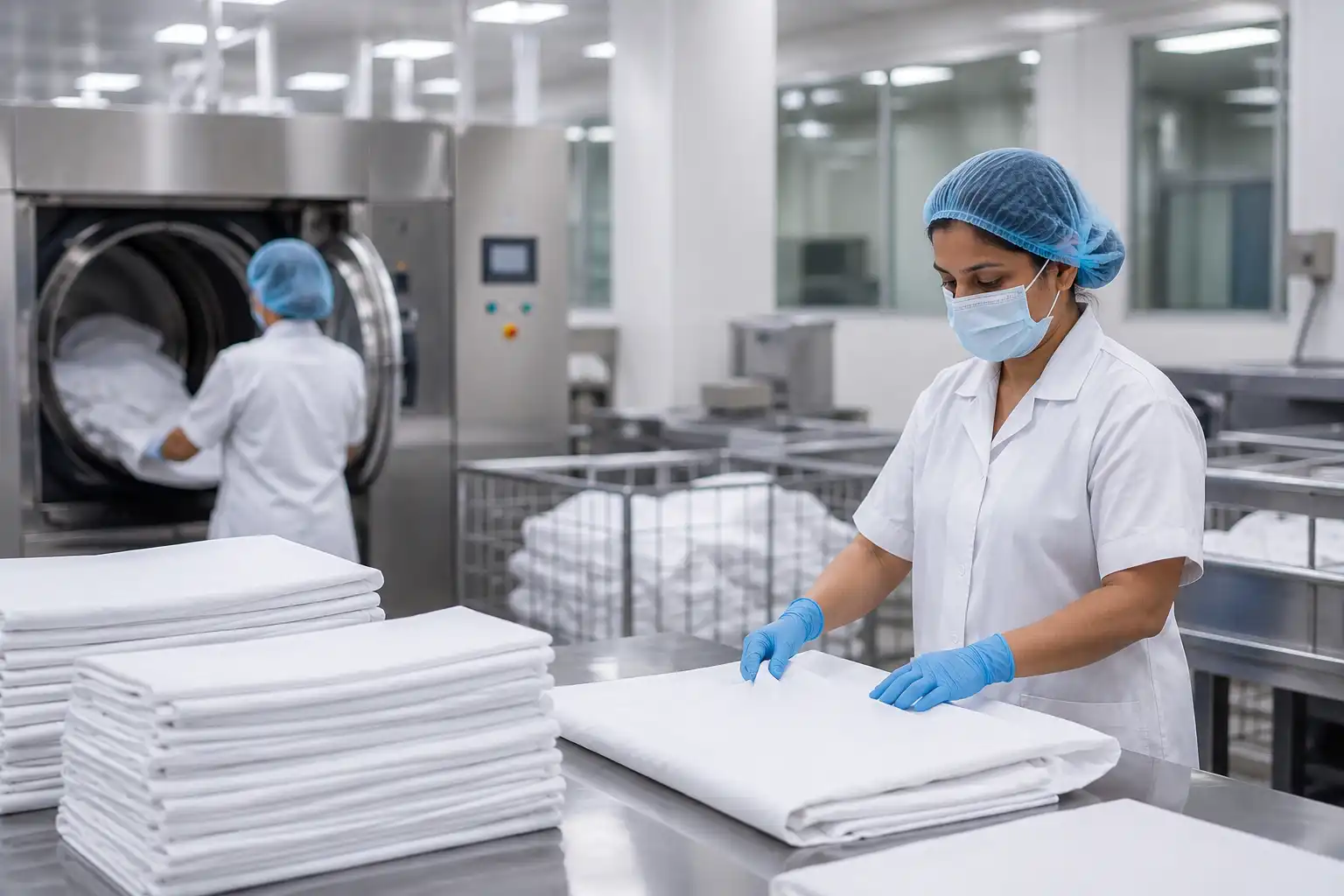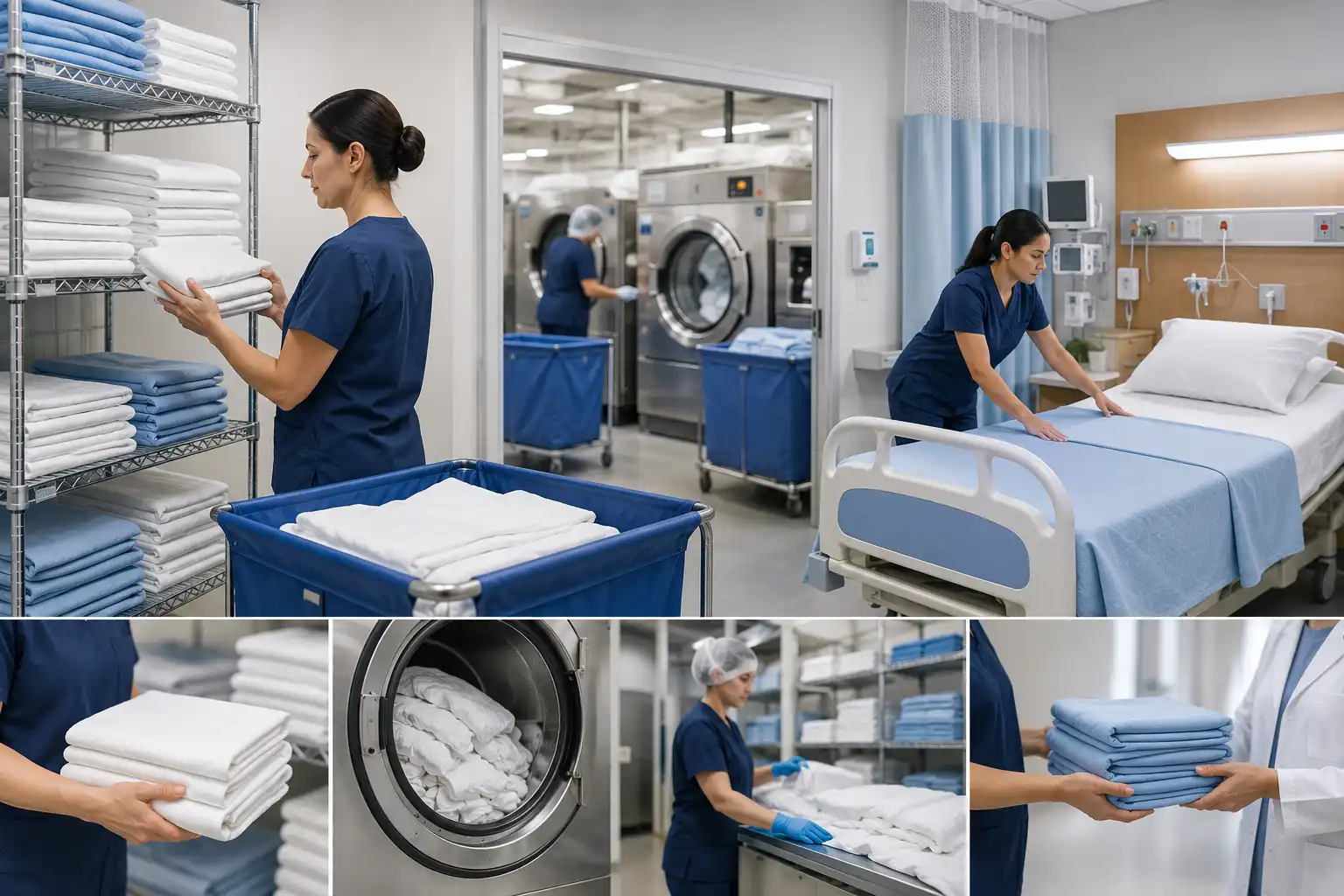
Walk through any well-run hospital and the clinical environment feels controlled and clean. Beds are made. Gowns are fresh. Surgical drapes are crisp and ready. What most people do not think about is the system working behind the scenes to make all of that possible, every day, without interruption.
Hospital laundry services are that system. They sit at the intersection of infection control, patient dignity, operational continuity, and regulatory compliance. When they work well, nobody notices. When they fail, the consequences show up fast: wards running short, hygiene standards compromised, and patient safety put at unnecessary risk.
This blog covers why hospital laundry services matter as much as they do, what proper healthcare linen management involves at each stage of the process, and what hospitals should expect from a provider serious about getting it right.
Linen Is a Patient Safety Issue, Not Just a Housekeeping One
Hospital textiles carry biological risk in a way that no other setting quite replicates. Bed sheets, patient gowns, surgical drapes, theatre linen, and staff uniforms all come into direct contact with patients who are often immunocompromised, post-operative, or carrying infections. The same textiles that provide comfort and dignity are also potential vectors for pathogen transmission if they are not processed correctly.
Healthcare-associated infections (HAIs) remain one of the most significant preventable risks in any hospital. Contaminated linen is a documented contributor to HAI transmission, which is why infection control teams treat hospital linen management as a clinical risk area rather than a logistical one. The standards applied to linen processing exist for the same reason as hand hygiene protocols and surgical sterilisation procedures: because lapses lead to patient harm.
Understanding this is the starting point for understanding why professional hospital laundry services are non-negotiable in a functioning clinical environment.
The Key Hygiene Standards That Hospital Laundry Must Meet
Professional healthcare linen management is governed by a set of hygiene standards that apply at every stage of the linen cycle, not just at the point of washing. Here is what each of those stages requires.
Sorting and Segregation
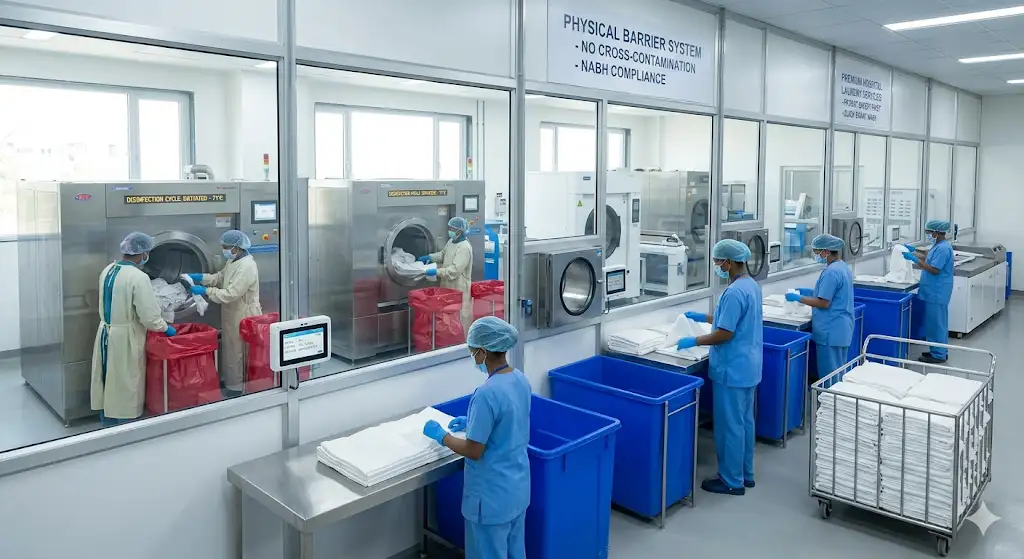
Soiled linen must be collected and segregated at the point of use before it moves anywhere else. Colour-coded, leak-proof bags separate linen by contamination level: general ward linen, infected or isolation linen, and OT or high-risk textiles each require distinct handling. Mixing these at collection is where cross-contamination most commonly begins.
Washing and Disinfection
Healthcare linen must be washed using hospital-grade detergents at validated temperatures. General linen is typically processed at a minimum of 60 to 70 degrees Celsius. High-risk and infected linen requires thermal disinfection at higher temperatures or a validated chemical disinfection cycle. The wash formula, temperature, and contact time are not preferences; they are parameters that determine whether pathogens are eliminated or survive the cycle.
Barrier Systems
A compliant hospital laundry facility maintains physical separation between soiled and clean zones at all times. Soiled linen enters on one side of the processing facility and clean linen exits from the other. Staff, equipment, and airflow do not cross between zones. This barrier principle is fundamental to preventing recontamination of linen that has already been disinfected.
Drying, Finishing, and Inspection
Post-wash handling is as important as the wash itself. Linen must be dried thoroughly at appropriate temperatures and then moved through ironing and finishing in a controlled environment that prevents recontamination. Each item should be inspected before it re-enters circulation. Damaged, stained, or structurally compromised items must be pulled and replaced rather than returned to wards.
Storage and Distribution
Clean linen must be stored in a controlled environment, free from dust, moisture, and contact with soiled items or surfaces. Separate trolleys for clean and soiled linen, covered transportation within the facility, and ward-wise distribution records are all part of maintaining the hygiene chain from laundry to patient contact.
Compliance, Accreditation, and What Auditors Look For
Hospital laundry services are not just a hygiene function. They are a compliance function. NABH accreditation standards include specific requirements around linen management: segregation protocols, wash parameters, storage conditions, documentation of processes, and evidence of quality checks. Hospitals pursuing or maintaining NABH status need their laundry arrangements to be auditable, not just functional.
What auditors typically want to see:
Hospitals that manage laundry informally, without documented processes and continuous record-keeping, find audit preparation stressful and the outcomes unreliable. Hospitals with a structured healthcare linen management arrangement in place find that compliance documentation is simply an output of normal operations.
Patient Comfort Is Part of the Picture Too
Infection control is the primary reason hospital laundry services matter. But patient experience is a close second. Patients spend most of their time in the hospital in direct contact with textiles. The quality of a gown, the freshness of a bed sheet, and the softness of a towel are small things that contribute meaningfully to how comfortable and cared-for a patient feels during what is often an anxious and difficult time.
Linen that is properly processed using the right chemistry and appropriate wash parameters maintains its softness, absorbency, and structural integrity across repeated cycles. Linen that is over-processed with aggressive chemistry, washed at excessively high temperatures, or run through too many cycles without assessment becomes rough, thin, and unpleasant for patients to use.
Good hospital linen management is not just about keeping linen safe. It is about keeping it in a condition that reflects the quality of care the hospital aims to deliver.
What To Expect From A Professional Hospital Laundry Provider
Not every laundry provider operating in the healthcare space is equipped to meet the standards that clinical environments require. The distinction between a general commercial laundry and a specialist hospital laundry services provider comes down to infrastructure, processes, and accountability.
A provider equipped for healthcare linen management will have:
How Quick Smart Wash Approaches Hospital Linen
Every element of Quick Smart Wash's hospital laundry services is designed around what clinical environments actually require. Their processing facilities operate with barrier-based systems, validated disinfection protocols, and healthcare-grade chemistry. OT linen, ICU linen, patient linen, and general ward textiles each move through appropriate, differentiated processing workflows rather than a one-size-fits-all wash cycle.
RFID-based linen tracking gives hospitals real-time visibility into their inventory at every stage of the cycle and generates the compliance documentation that NABH assessments require as a standard output of normal operations. Linen rental is available for hospitals that want to convert procurement and lifecycle management into a single managed service.
For hospitals that want on-site processing, Quick Smart Wash sets up and runs a fully managed laundry facility within the hospital premises, covering all capital expenditure, equipment, staffing, and operational management. For those using an off-site model, linen is collected, processed at their central processing units, and returned fully finished and ward-ready. Either way, the hospital gets hospital linen management that meets clinical standards consistently, without carrying the infrastructure burden of running it.
The Standard Should Not Be Optional
Hospital laundry services sit at the foundation of patient safety. They are not a peripheral support function. Every ward, every OT, every ICU depends on a continuous supply of linen that has been processed correctly, tracked accurately, and distributed reliably. When that system works as it should, clinical teams have one less thing to manage. When it does not, the consequences reach patients directly.
The standard of healthcare linen management a hospital accepts is ultimately a reflection of the standard of care it delivers. Treating linen as a clinical resource managed to clinical standards is not an aspiration. It is what patient safety requires.
If your facility is reviewing how its laundry operations are currently structured, it is worth asking whether the provider you work with, or the in-house operation you run, genuinely meets that standard.